Call Us
+243 997 858 508 / +243 998 668 680Mail Us
pelumrdcongo@gmail.comAddress
No 34, Avenue Osso, Quartier Mabanga,Commune de Karisimbi, Ville de Goma,
Province du Nord Kivu,
Democratic Republic of Congo
Core domains of change through which PELUM-RDC advances agroecology, land stewardship and rural livelihoods.
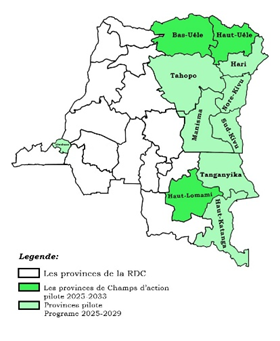
Areas of Intervention
The core areas of change through which PELUM-RDC and its member organisations support agroecological transition and rural livelihoods.
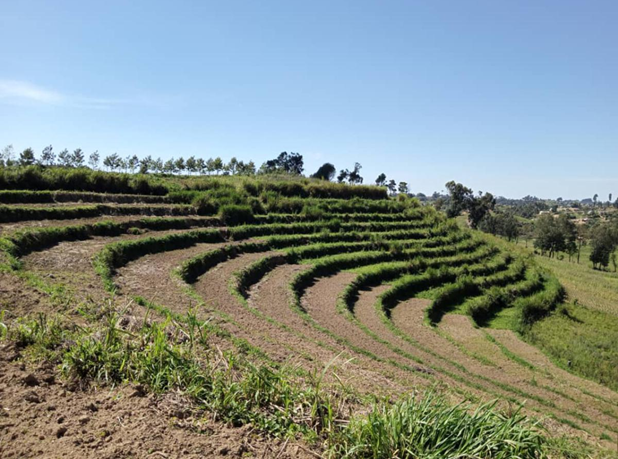
PELUM-RDC promotes sustainable land management, agroecology, seed systems, agroforestry, entrepreneurship, territorial markets, the inclusion of women and youth, and network and institutional development.
These areas combine farmer support, policy engagement, training, environmental protection and collaboration with stakeholders ranging from communities to research institutions and development partners.
Six Areas
These six areas are presented in a cleaner, easier-to-manage format for the website.
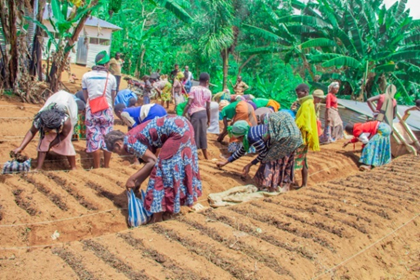
Support for sustainable land use, natural-resource management and climate resilience among farming communities.
Promotion of local seeds, seed autonomy, biodiversity and climate-resilient practice.
Integration of trees, biodiversity, carbon sequestration and improved soil quality.
Development of local markets, value chains and business opportunities linked to agroecology.
Capacity building, economic empowerment and stronger participation of women and youth.
Strengthening relationships, systems, governance, learning and collaboration across the network.
Partnerships and Impact
The intervention model depends on collaboration, knowledge sharing and practical support for member organisations and local communities.
The areas of intervention document emphasises partnerships with member organisations, civil society, government institutions, international organisations and farming communities. It aims to improve livelihoods, strengthen resilience to climate change, promote agroecological practice and support the socio-economic development of rural communities.
It also foregrounds women and youth, knowledge sharing, advocacy and institutional strengthening as necessary drivers of long-term impact.
No 34, Avenue Osso, Quartier Mabanga,
Commune de Karisimbi, Ville de Goma,
Province du Nord Kivu,
Democratic Republic of Congo
+243 997 858 508 / +243 998 668 680
pelumrdcongo@gmail.com
Monday - Friday
Saturday
Sunday